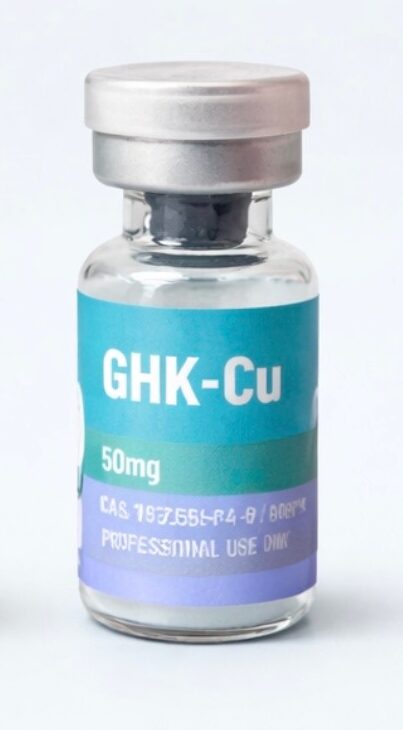
GHK-Cu is a copper-binding peptide that promotes skin regeneration, wound healing, hair growth, anti-aging effects, and systemic tissue repair.
Skin and Anti-Aging Benefits
GHK-Cu stimulates collagen and elastin production, improving skin firmness, elasticity, and reducing fine lines and wrinkles. It also enhances glycosaminoglycan synthesis, which adds volume and hydration to the skin, while regulating metalloproteinases to prevent structural protein breakdown. Studies show that topical GHK-Cu can outperform vitamin C and retinoic acid in improving skin thickness, wrinkle severity, and overall photoaging scores. Its anti-inflammatory properties further reduce redness and irritation, making it gentler than traditional retinoids.
Wound Healing and Tissue Repair
GHK-Cu accelerates wound healing, scar reduction, and tissue remodeling by promoting angiogenesis (formation of new blood vessels) and attracting immune cells to injury sites. It has been incorporated into medical wound dressings, showing faster recovery, reduced infection rates, and better pain management in burn patients. Injectable forms can enhance systemic tissue repair, including skin, bone, liver, and gastric tissue.
Hair Growth
GHK-Cu supports hair follicle health and growth, reducing shedding and stimulating new hair development. Visible improvements in hair density and thickness are typically observed within 4–6 months of consistent use. Its effects on hair are comparable to Minoxidil in some studies, though more research is needed for advanced hair loss.
Anti-Inflammatory and Systemic Effects
GHK-Cu exhibits potent anti-inflammatory properties, both topically and systemically when injected. It can modulate gene expression to reduce inflammation, support connective tissue repair, and enhance antioxidant defenses, including increasing glutathione levels, which may aid liver health. It also contributes to bone density, nervous system function, and immunity through improved copper absorption.
Mechanism of Action
GHK-Cu is a tripeptide (glycyl-histidyl-lysine) bound to copper, naturally found in plasma, saliva, and urine. Its levels decline with age, correlating with slower wound healing, thinning hair, and reduced skin elasticity. The peptide acts as a signaling molecule, influencing gene expression in approximately 31% of the human genome, promoting tissue regeneration, collagen synthesis, and antioxidant protection.